Skip to Content

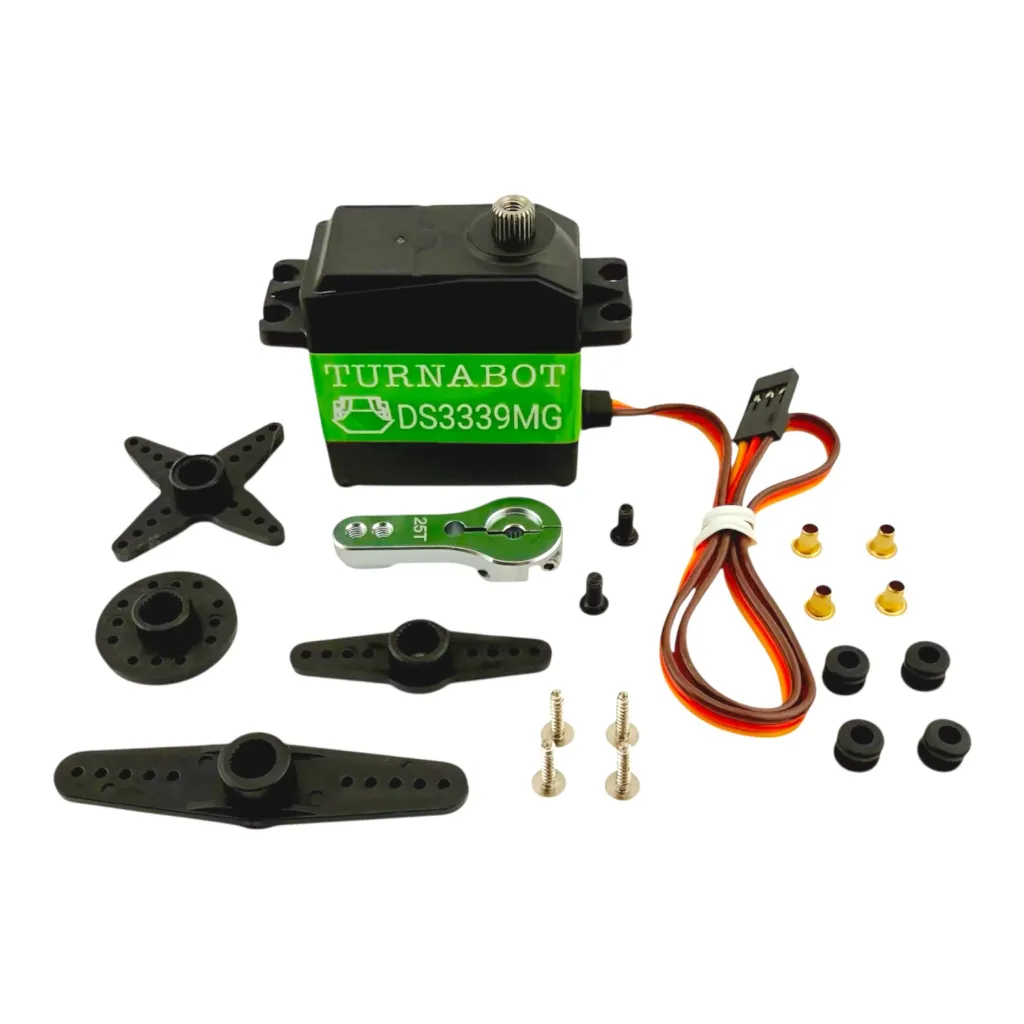
Turnabot DS3339SSG Servo

(0 review)


High-Performance Full-Size Servo (3.3 RPS / 39 kg·cm)

This servo is the highest-performing standard (full-size) servo tested by Turnabot. It is not a micro servo and is designed for applications that demand exceptional speed, strength, and durability.

With a rated speed of 0.05 sec per 60°, this is the fastest full-size servo we have tested. While its 39 kg·cm of torque is not the highest available, it is extremely difficult to stall in 1 lb combat robot applications, making it a highly effective choice for fast, high-load mechanisms.


SPECIFICATIONS:


Speed

Torque

8.4 volts

0.05 sec / 60°

39 kg·cm

7.4 volts

 0.06 sec / 60°

35 kg·cm

6.0 volts

0.08 sec / 60°

29 kg·cm

5.0 volts

0.10 sec / 60° 

26 kg·cm


Specs:

Weight: 76 g (with aluminum horn)

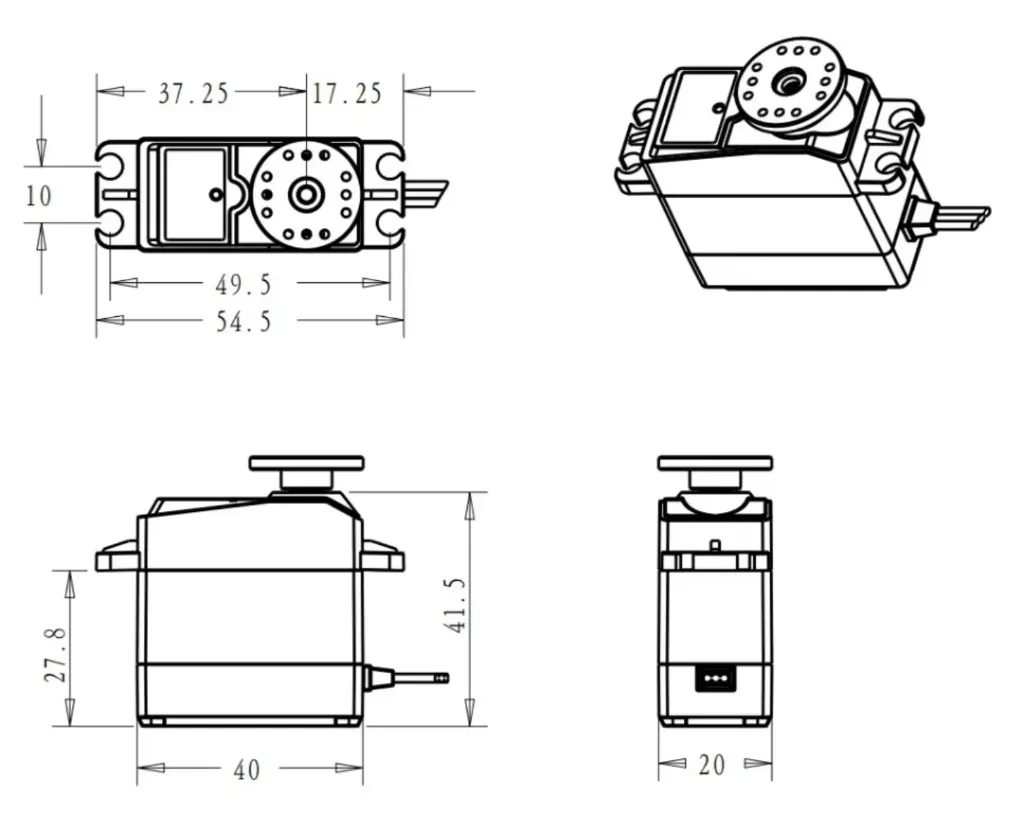
Dimensions: 40 mm x 20 mm x 41.5 mm


39.97 39.97 65.00
( 0.00/Units)
 See Terms and Conditions 


Quiet Operation

Unlike many high-power servos, this model operates surprisingly quietly. Builders who rely on audible servo noise to detect load or stall conditions should be aware that traditional “servo whine” may not be present with this servo.


Servo Naming Convention

Manufacturer servo model names often do not reflect actual performance. To simplify comparison, Turnabot highlights two key performance metrics: rotational speed, measured in revolutions per second (RPS), and torque, measured in kg·cm.

This servo operates at 3.3 RPS and produces 39 kg·cm of torque, providing extremely fast response with high resistance to stalling.


Durability Notes

Many lower-cost servos burn out after only a few seconds of hard stalling and often fail after only a few minutes of light stalling. This servo can tolerate limited stalling for extended durations, including full battery discharge cycles.

Important: Prolonged stalling will generate heat. While this servo is far more tolerant of abuse than lower-cost alternatives, it may become uncomfortably hot to the touch. To maximize service life and reduce unnecessary power consumption, stalling should be minimized whenever possible.